
 NL
 EN
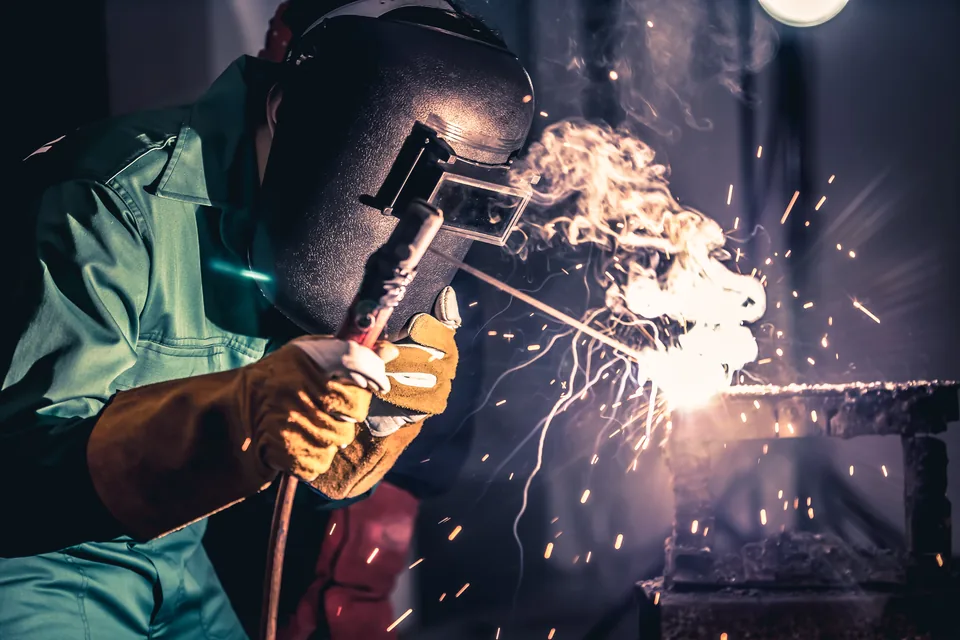
Filipino welders work around the world in shipyards, the petrochemical industry and steel construction. For employers in the Netherlands and Belgium, they are an interesting group of skilled workers. At the same time, the paperwork raises questions: what does a TESDA certificate say, is it valid in Europe, and how do you know whether a welder really masters the work?
This article explains how Philippine and European certification relate to each other and why a practical test is indispensable.
What is TESDA?
The Technical Education and Skills Development Authority (TESDA) is the Philippine government agency for technical vocational education. TESDA sets training standards and issues National Certificates (NC) after an assessment. For welders there are certificates per welding process and level, for example for shielded metal arc welding (SMAW) and TIG welding (GTAW). The levels run from NC I to NC IV.
A TESDA certificate shows that the welder completed recognised training and passed an assessment. It says less about current ability. A certificate from years ago does not mean that someone can make a good weld today in your material and in the position you need.
Is a TESDA certificate valid in Europe?
Not automatically. In Europe, welders usually work with a qualification under the standard for welder qualification testing (EN ISO 9606). That qualification is tied to a welding process, a material group, a position and a thickness range, and is issued after a welding test supervised by an examiner or inspection body. For certain applications, such as pressure equipment, European rules require welders to be qualified by a recognised body.
In practice, a Filipino welder therefore takes a welding test according to the welding procedure specification (WPS) you use, either in the Philippines or after arrival. Many welders with experience in the Middle East or at international yards have previously welded to ISO or ASME standards and know this way of working.
Why a practical test is indispensable
A CV and certificates give direction, but for welders practical ability is decisive. A good practical test:
- follows the process, materials and positions you use in your own work;
- is carried out by someone with welding expertise;
- is assessed on the appearance of the weld and, where necessary, with further examination such as a bend test or radiographic testing;
- is recorded, so that you can assess the result yourself.
A practical test in the Philippines has one major advantage: you know before the permit application and departure whether the candidate meets your requirements. This prevents a process from falling through on workmanship only after arrival.
Preferably supply the WPS or the assessment criteria yourself. You then test exactly what you need, and not a general skill. A practical test also prevents disappointment on the candidate’s side: someone who knows what is expected can prepare in a targeted way.
What to look for in a welder’s CV
Before a candidate takes a welding test, the CV already says a lot. Pay particular attention to these points:
- Processes and positions. Which welding processes does the candidate master, and in which positions? Experience with welding pipe in a fixed position, for example, requires more skill than welding plate in the flat position.
- Materials. Carbon steel, stainless steel and aluminium each require their own approach. Ask about the materials the candidate has worked with recently.
- Type of projects. Work on pressure equipment, pipework or shipbuilding sets different requirements from structural work. Projects with strict quality control, such as in the petrochemical industry, show that a welder is used to inspection.
- Quality figures. Some welders can say how often their welds were rejected on inspection. That is a useful addition, but it does not replace your own test.
- References. A conversation with a previous supervisor or welding inspector often gives an honest picture of workmanship and work attitude.
Which welders can you find in the Philippines?
The supply is broad. Common profiles include:
- Plate and structural welders for steel construction and mechanical engineering, often with stick and MAG welding.
- Pipe welders for pipework in the process industry and installation engineering, with TIG and stick welding in difficult positions.
- Shipbuilding welders with experience at yards in Asia or the Middle East.
- Stainless steel and aluminium welders, a smaller group with specific experience.
Read more about these profiles on our page about Filipino welders and metal professionals.
From selection to start
A process for a Filipino welder generally runs in six steps:
- Profile and feasibility. You describe the role, the processes and the certification you need. We assess which permit route in the Netherlands or Belgium is feasible.
- Selection in Manila. Candidates are selected on experience and checked references.
- Practical test. The welder takes a welding test according to your specifications. You receive the result.
- Qualification. Where necessary, a European welder qualification is arranged, in the Philippines or after arrival.
- Permit and departure. The permit in the Netherlands or Belgium and the Philippine departure procedure with DMW are aligned with each other.
- Start. The welder starts work, with housing and a permanent point of contact.
Which permit fits a welder?
That depends on the country, the role and the pay. In the Netherlands, the highly skilled migrant scheme comes into view for an experienced welder if the grade under the collective labour agreement reaches the IND income threshold. Otherwise, the combined residence and work permit (GVVA), with a labour market test, is the alternative. In Belgium, welding roles regularly appear on the list of shortage occupations, which may make a combined permit for intermediate-skilled roles possible.
You can read more about the routes under work permits for Filipino employees.
How SkillShift selects welders
Our own team in Manila selects welders and carries out practical tests. You only speak to candidates who have been technically assessed. Would you like to know whether your vacancy is feasible? Request a feasibility check.